Dining Room Tables and Chairs
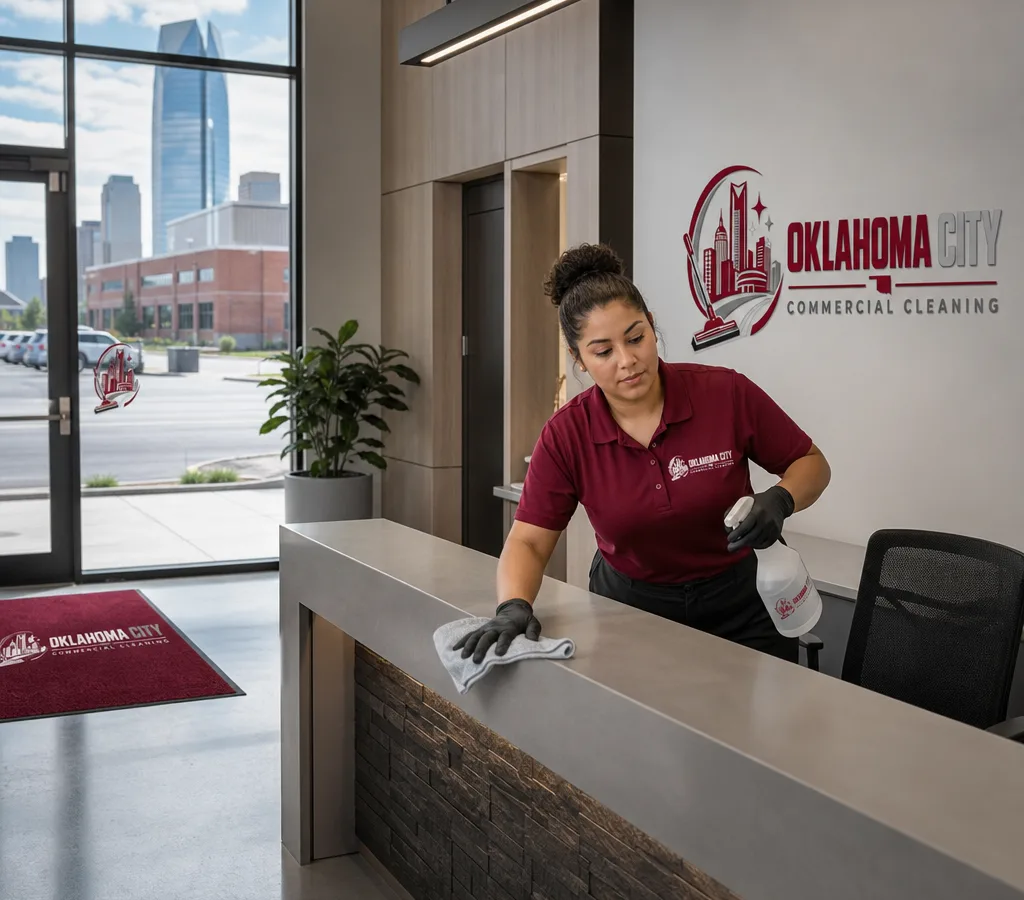
Guest-facing tables, chair backs, booths, and host stands collect fingerprints, crumbs, and spills throughout a shift. Cleaning focuses on surfaces guests touch and the edges staff may miss while turning tables.
Serving Oklahoma City, Oklahoma & surrounding areas
Mon–Fri 8am–6pm · Sat 9am–2pm
Restaurant Care · Oklahoma City
Keep the room guests see, the kitchen team uses, and the details an inspector notices ready for the next opening shift and every day of service in Oklahoma City.
Opening Standard
A kitchen can look presentable at a glance while grease film remains on ledges, wall edges, and touchpoints near prep work.
Opening staff need floors, restrooms, and guest areas addressed before the first order, not discovered during a rush.
Two Work Zones
Dining rooms, entry glass, and guest restrooms shape the visit, while kitchens, dish areas, and floor edges carry the residue of service. Each zone needs work suited to its use.
Guest-facing tables, chair backs, booths, and host stands collect fingerprints, crumbs, and spills throughout a shift. Cleaning focuses on surfaces guests touch and the edges staff may miss while turning tables.
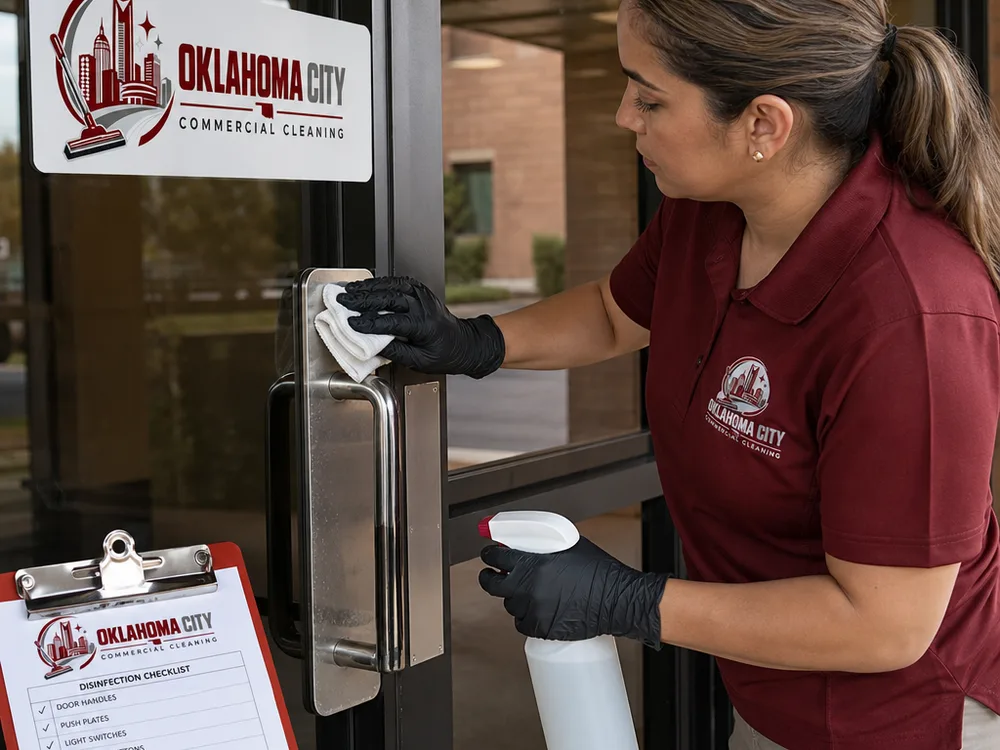
Door glass and handles create an immediate impression before anyone reaches the dining room. Smudges return quickly in a busy restaurant, so this area benefits from attention at the close and on an agreed service schedule.
Grease does not remain near its source. It can settle on nearby surfaces, travel on shoes, and leave a tacky feel along equipment edges, walls, and floor transitions that deserve closer attention than an ordinary wipe-down.
Spills, dropped food, and constant traffic change how restaurant floors wear. Care includes the paths around tables, service stations, and kitchen entries where soil builds faster and can make a floor look dull before the room itself does.
A restroom checked only after closing may still fall short halfway through a meal period. Scheduled attention can address sinks, fixtures, floors, dispensers, and visible touchpoints while guests are actively using the space.
Beyond Appearances
The difference shows in the places a quick visual pass skips: wall edges, lower shelving, handles, floor corners, and the residue that returns after a surface dries.
Service plans can separate routine cleaning from the detailed work that helps opening staff see a kitchen as ready rather than merely less messy.
Nightly Window
The usable service window starts after the last guest leaves and ends before staff return to set up. Planning around that interval keeps cleaning from colliding with closing duties or morning preparation.
A walkthrough identifies when guests clear out, when kitchen work ends, and which areas stay active longest. The schedule is built around the actual close rather than a generic evening slot.
The plan separates required nightly attention from details handled on a rotation. That distinction helps the crew spend time where the next opening will reveal the biggest problem.
Cleaning can begin with back-of-house surfaces and floor edges before moving through service paths. This order limits tracked residue and leaves guest-facing areas for a final presentation check.
Fixtures, floors, dispensers, and touchpoints receive a final review after the building quiets down. The check is designed around what a guest encounters at the start of the next service period.
Notes can flag a recurring spill area, a supply issue, or a detail that needs follow-up. Opening staff then have a practical record instead of guessing what changed overnight.
Service Pricing
Grease load, floor type, operating hours, and the number of service periods all move a restaurant quote. As recurring janitorial context, service often runs about $0.08 to $0.20 per square foot per month, and smaller offices often fall around $300 to $900+ per month. A restaurant plan is priced after a walkthrough, then put into a written quote that reflects its kitchen, dining room, and closing schedule.
Readiness Checks
Before changing a cleaning plan, an operator needs to know what happens after a busy service and how the work is checked before the next one. These answers focus on opening readiness and inspection-sensitive details.
Yes, the service window can be planned around the time guests leave, closing duties finish, and opening preparation begins. A walkthrough establishes those boundaries so the crew is not working around active table service or kitchen production.
Attention extends to nearby wall areas, lower surfaces, handles, floor edges, and paths where residue can travel. The written scope identifies the areas that receive frequent care and those placed on a deeper-detail rotation.
They can. A plan can include checks during active hours for visible fixtures, floors, dispensers, and touchpoints, along with the more complete close-of-day cleaning that prepares the room for opening.
Inspection readiness depends on more than open counters. It includes the residue and buildup around edges, lower areas, handles, floors, and other places a fast closing sweep may not fully address before staff begin prep.
Yes. High-spill paths near service stations, table routes, and kitchen entries can receive emphasis in the routine. The walkthrough is where staff point out where soil and moisture return fastest, then set the right service focus.
The service plan can include a final review of guest-facing areas, restrooms, floors, and agreed kitchen details. Any recurring issue is documented so the next visit starts with useful context rather than a reset guess.
Plan the Walkthrough
Include closing and opening leads in a walkthrough to identify grease-prone areas, floor trouble spots, restroom checks, and time between services. The result is a written quote built around how your day ends and begins.
Request a Quote
Send the details and we will arrange a walkthrough, then put a written scope and schedule in front of you.