Midwest City Service Area

Shift Facility Cleaning in Midwest City

Midwest City service businesses, warehouses, and light industrial facilities can arrange commercial cleaning from Oklahoma City around shift changes, high-use restrooms, supplies, and hard-used areas.

✓Multi-Shift Facility Care
✓High-Use Restroom Plans
✓Supply Restocking Checks
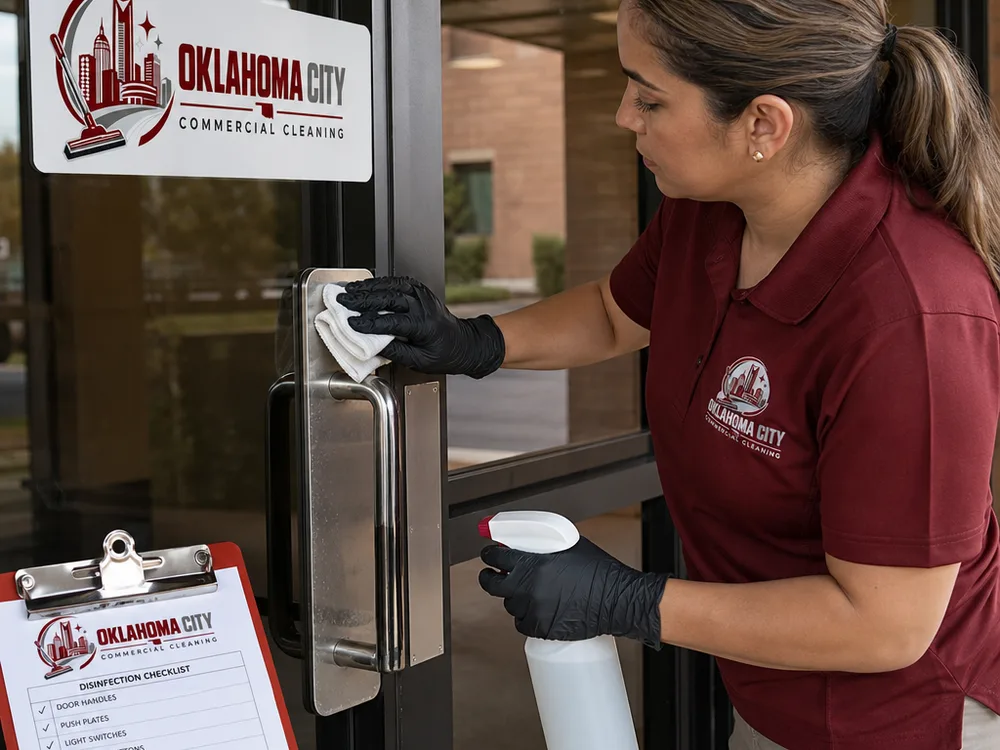
Cleaner disinfecting high-touch door handles and push plates at the entrance of a commercial suite with a checklist clipboard visible

Extended Use

More Than One Shift Changes the Plan

A site used across multiple shifts does not get recovery time like an office that empties daily, around restrooms, break areas, entrances, and waste points.

Cleaning needs to account for crew changes, low supplies, and checks on high-use areas without disrupting workers.

Highest Load

Focus on Areas That Carry the Most Use

Restroom load, break-area use, entry traffic, waste volume, and supply demand can drive the cleaning plan more than the name of a room. These high-load areas need frequencies and checks that match the building's pace.

Restroom Load and Supplies

Restroom load affects cleaning frequency, fixture attention, floor condition, waste removal, and supply restocking. The scope can identify which supplies are checked, how often they are replenished, and who should be notified if usage changes.

Break-Area Use Patterns

Break-area use creates spills, waste, touchpoints, and floor debris throughout the day. Service can be planned around shift timing so tables, counters, sinks, and waste areas receive attention when it is most useful.

Entry Traffic and Floors

Entry traffic carries debris onto floors and makes visible marks accumulate near doors and mats. The plan can set a practical frequency for the entry based on the building's use and the time between crew changes.

Waste Volume at Work Points

Waste volume often varies by work point and shift, which makes a single building-wide assumption unreliable. A facility review can identify bins, collection areas, and service timing needed to prevent overflow or missed removal.

Supply Demand Checks

Supply demand is easiest to manage when the scope says what gets checked and when. Restroom paper goods, soap, liners, and related items can be part of a regular inspection rather than an urgent request after supplies run out.

Steady Condition

Consistency Depends on More Than a Visit

A single service visit does not guarantee steady conditions when several crews use the same restrooms and break areas throughout the day. Frequency, restocking, and an agreed method for reporting issues all matter.

Supervision is especially important when the work covers a large facility or multiple cleaning windows. The scope should make clear who reviews the work and how concerns about a high-use area are passed along.

Squeegee pulling water cleanly across commercial glass while a microfiber cloth details the frame corner

Crew Coordination

Keep Standards Steady Across Crews

Multi-shift buildings need a cleaning plan that remains understandable across crews and service windows. Clear supervision and defined checks help the result stay consistent from one crew to the next.

01

Identify High-Load Points

The walkthrough looks for restrooms, break areas, entries, waste points, and supply locations that receive the most use. Those areas become the priorities for frequency and condition checks.

02

Set Shift-Aware Timing

Service windows are discussed around shift changes, occupied work periods, and access to high-load areas. The schedule aims to support the building without creating avoidable interruption for workers.

03

Define Restocking Checks

The scope states which supplies are checked, where they are kept, and how low stock is reported. This turns restocking into a regular part of service instead of an uncertain last-minute task.

04

Assign Review Responsibility

A clear contact and review process helps verify that the expected work was completed across service windows. Concerns can be tied to a specific area, task, or supply issue instead of being reported generally.

05

Adjust for Actual Use

Use patterns can change with staffing, shifts, or the way parts of the facility are used. Reviewing those changes allows the schedule and high-load priorities to be updated before standards slip.

High-Use Cost Range

What Does Midwest City Facility Cleaning Cost?

Higher-use facilities can sit at the upper end of pricing because restrooms, break areas, waste points, entry floors, supply checks, and multiple service windows require more labor. Plans for larger offices, medical suites, and higher-frequency service often run $1,200 to $4,000+ per month. Recurring janitorial service may also be estimated around $0.08 to $0.20 per square foot per month. A walkthrough leads to a written quote that accounts for supervision, restocking, and frequency.

Operations Questions

Questions About Supplies Restrooms and Work Checks

For a hard-used facility, the useful questions are operational rather than cosmetic. The answers below address who watches supply levels, how restroom frequency is set, and how completed work is reviewed.

How Often Can High-Use Restrooms Be Cleaned?+

Restroom frequency is set after looking at usage, shift timing, fixture count, waste volume, and the condition expected between visits. A plan can include recurring cleaning and supply checks that match the facility's actual load rather than an arbitrary interval.

Can Restroom Supplies Be Part of the Scope?+

Yes, the written scope can state which items are checked and restocked, such as paper goods, soap, and liners. It should also identify where supplies are stored and how the facility wants low stock or unusual demand reported.

Who Checks Work Across Different Service Windows?+

The facility and cleaning provider can agree on a contact and a process for reviewing work across shifts or service windows. Clear review points make it easier to raise an issue about a restroom, entry, waste area, or missed supply check.

How Is Cleaning Scheduled Around Shift Changes?+

The schedule is built around the periods when areas are occupied, the changeover times, and the access needed for each task. Some work may happen between shifts, while other tasks are placed in a window that causes less disruption.

What Areas Usually Need the Most Attention?+

The walkthrough identifies the areas with the highest load, which often includes restrooms, break spaces, entries, waste points, and floors near active work areas. The exact priority list is based on the facility's use and should appear in the scope.

Can the Plan Change When Use Increases?+

Yes, a change in staffing, shifts, supply demand, or restroom use can justify a review of the cleaning schedule. Updating the written scope helps ensure that the additional work, timing, and checks are understood by everyone.

Coordinate Service

Plan for the Facility at Full Use

Discuss the Midwest City facility's shifts, restroom demand, supply locations, and work-review process during a walkthrough. The result can be a written plan for the highest-load areas.

Request a Quote

Tell Us About Your Facility

Send the details and we will arrange a walkthrough, then put a written scope and schedule in front of you.