Clinical Facility Care

Medical Facility Cleaning in Oklahoma City

Give your practice a disciplined cleaning plan with room-specific touchpoint work, observed disinfectant dwell time, and clear routines for shared patient areas.

✓Written Protocols for Rooms
✓Color-Coded Cloth Control Methods
✓High-Touch Room Inventory Lists
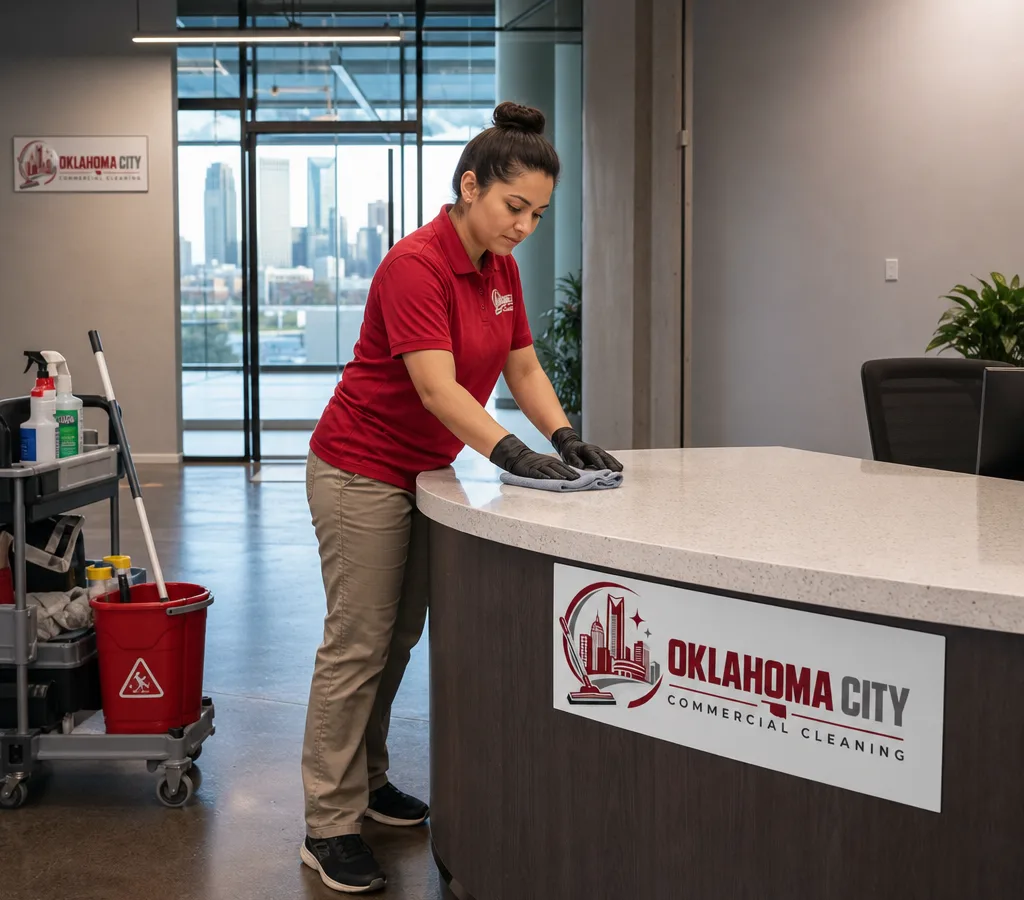
Commercial cleaner disinfecting a reception counter in a modern Oklahoma City office with a supply cart and floor-care tools nearby

Written Method

Each Visit Follows a Written Cleaning Protocol

A dependable clinical cleaning program sets room tasks, touchpoints, products, and check steps in writing so the work does not depend on a changing memory.

Method matters because a disinfectant needs its stated dwell time, and a cloth used in one room must not carry soil into the next.

Clinical Functions

Care Changes Across Intake, Exam, Treatment, and Staff Rooms

Reception, waiting rooms, exam spaces, treatment rooms, restrooms, and staff areas each serve a different clinical function. The cleaning plan names the room type and its relevant high-touch inventory.

Reception and Check-In Areas

Reception counters, clipboards, pens, payment terminals, door pulls, and seating can be touched by many people in a short period. The protocol identifies the surfaces that require attention between or after patient traffic.
Waiting Room Seating Zones

Waiting rooms are often the first space a patient judges. Chairs, tables, armrests, door hardware, and visible floor soil need a consistent presentation while the routine also accounts for the high-touch surfaces around them.

Exam Room Touchpoint Lists

An exam room benefits from a defined inventory instead of a broad instruction to disinfect everything. The list can cover door hardware, light switches, counter surfaces, seating, and other agreed nonclinical touchpoints.

Treatment Room Turnover Support

Treatment areas require a careful sequence that respects the practice's workflow and the products selected for the room. The written scope establishes the surfaces included in routine cleaning and the order used to address them.

Staff and Child Restrooms

Restroom work uses dedicated materials so a cloth used there does not reach an exam or reception surface. Fixtures, floors, dispensers, door hardware, and visible touchpoints are handled as their own controlled task.

Contamination Control

Color and Contact Time Keep the Routine Disciplined

Color-coded cloths and tools create a visible control: restroom materials remain assigned to restrooms, while patient-facing and exam-area supplies follow their own designated use.

A disinfectant only performs as intended when it stays wet for the required dwell time. The protocol makes that step explicit rather than treating it as a quick spray-and-wipe task.

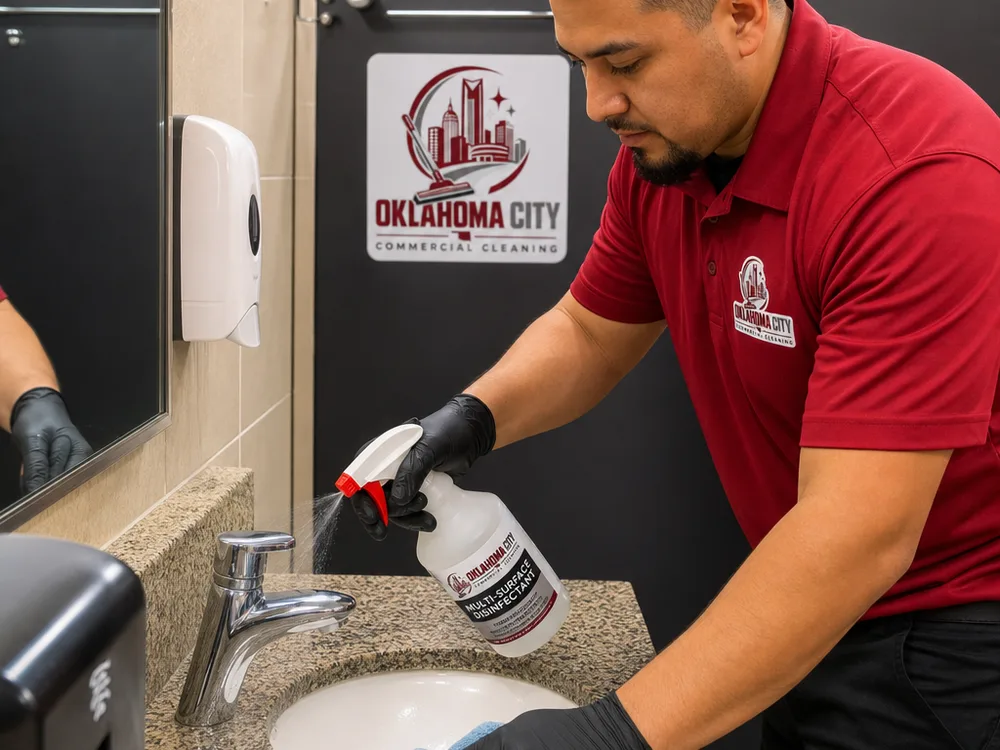
Commercial cleaner disinfecting restroom sink fixtures and touchpoints using a labeled product and color-coded microfiber cloth

Protocol Review

The Protocol Is Set, Observed, and Checked

Clinical cleaning begins with a walkthrough of room functions, products, access, and high-touch surfaces. The plan is then reviewed against the practice routine so staff know how work is performed and checked.

01

Map Each Room Function

The walkthrough distinguishes reception, waiting, exam, treatment, restroom, and staff spaces. That map prevents one generic checklist from overlooking a room's actual traffic and touchpoint pattern.

02

Build the Touchpoint Inventory

Each room receives an agreed list of handles, switches, counters, seating, and other relevant surfaces. The inventory gives the crew a repeatable reference and gives the manager something concrete to review.

03

Assign Materials by Area

Cloths and tools are assigned by color or category before service begins. The separation supports cross-contamination control and makes it easier to see whether the intended routine is being followed.

04

Observe Product Dwell Time

The crew follows the label directions for the selected disinfectant, including the required wet contact period. This step is checked as part of the method rather than assumed from a completed spray.

05

Review the Visit Record

The practice can receive notes on completed work, recurring touchpoint concerns, and details requiring follow-up. The record keeps changes to the protocol visible when room use or patient flow shifts.

Service Pricing

What Does Medical Facility Cleaning Cost in Oklahoma City?

About $200 to $900+ per month is a common context for smaller offices on a 1 to 2 times per week schedule, while larger offices, medical suites, and higher-frequency plans often run $1,200 to $4,000+ per month. Room count, clinical function, high-touch inventory, dwell-time requirements, and the frequency of patient traffic move a practice up or down that range. After a walkthrough, the scope is documented in a written quote.

Provider Review

What Should a Practice Manager Ask?

Selecting a provider requires more than confirming the visit time. A practice manager needs to understand the room protocol, material controls, product use, and how the provider records work in patient-facing spaces.

How Do You Document Each Room Protocol?+

The written plan identifies room categories, routine tasks, high-touch items, approved products, and check steps. A room-specific inventory helps the team follow the same method even when the order of visits changes.

How Is Cross-Contamination Controlled Between Rooms?+

Material controls can include color-coded cloths and tools assigned by room type or function. In particular, restroom materials stay within restroom work so they do not move to exam, treatment, reception, or waiting areas.

Will Disinfectant Dwell Time Be Observed?+

The plan can require staff to follow the product label's wet contact time before wiping or allowing the surface to dry. Managers can ask how that step is taught, observed, and included in quality checks.

Which Touchpoints Are Listed for Exam Rooms?+

The inventory is developed during the walkthrough and can include door hardware, light switches, counters, seating, and other agreed nonclinical surfaces. The final list reflects the function and layout of each room.

How Are Clinical Waste Handoffs Coordinated?+

The written plan marks the handoff points for clinical waste handling so routine cleaning follows the practice's process. That coordination keeps room care organized without leaving uncertainty about who addresses each task.

Can the Plan Change With Patient Flow?+

Yes. A schedule can be reviewed when hours, room use, staffing, or patient volume shifts. The manager and provider can update touchpoint lists and service timing through the written scope rather than relying on verbal changes.

Set the Method

Begin With a Room-by-Room Protocol

Meet with the practice manager to map room functions, high-touch inventories, product requirements, and access timing. Your written scope and quote can then reflect a disciplined method for facility care.

Request a Quote

Tell Us About Your Facility

Send the details and we will arrange a walkthrough, then put a written scope and schedule in front of you.